Grounded Reasoning Systems for Cloud Architecture
Grounded reasoning reshapes cloud architecture
Building sophisticated cloud systems requires more than stringing together components—it demands reasoning about how they work together. In a recent technical deep dive, Iman Makaremi explains how grounded reasoning systems are transforming cloud architecture by combining logical reasoning with empirical grounding. This approach helps bridge the gap between theoretical system design and practical implementation challenges that cloud architects face daily.
Key takeaways from Makaremi's presentation:
-
Grounded reasoning systems combine logical inference with empirical observations, allowing them to produce practical conclusions that theoretical reasoning alone might miss.
-
Cloud architecture inherently involves complex tradeoffs between scalability, cost, reliability, and performance—decisions that benefit tremendously from reasoning systems that can evaluate hypothetical scenarios.
-
Modern reasoning systems need both declarative representations (describing what a system should accomplish) and procedural knowledge (understanding how to implement it) to be truly effective.
The power of balanced reasoning
What struck me most about Makaremi's approach is the explicit emphasis on balancing theoretical knowledge with practical constraints. Too often in cloud architecture, we see organizations leaning too heavily in one direction—either building entirely based on abstract principles without regard for real-world limitations, or conversely, just cobbling together components based on familiarity without any architectural coherence.
This tension matters enormously in today's cloud landscape. As systems grow increasingly complex, with microservices, distributed data stores, and multi-cloud deployments becoming standard, the cognitive load on architects has exploded. The ability to reason through these complex systems—not just individually but as interconnected elements—separates truly resilient architectures from those that collapse under their own complexity.
Practical applications beyond the presentation
What Makaremi's talk didn't fully explore was how these reasoning systems operate in specific industries with unique constraints. Take healthcare, for instance, where regulatory requirements like HIPAA create additional layers of complexity. A grounded reasoning system for healthcare cloud architecture would need to incorporate these compliance requirements as first-class constraints, not afterthoughts.
Consider a healthcare provider migrating patient data systems to the cloud. Pure theoretical reasoning might suggest an optimal data partitioning strategy for performance, but a grounded approach would recognize that certain patient data cannot legally reside in particular geographic regions, overriding the theoretical optimum with practical necessity
More videos
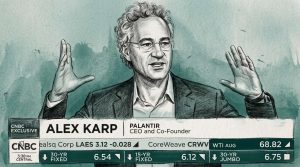
Alex Karp just told CNBC the AI industry is “effing insane.”
He’s right about one thing: AI isn’t overhyped, it’s mispriced. He’s also the guy selling you the fix....

Claude Fable 5: When Capability Meets Economics
Anthropic released Cloud Fable 5 with a paradox built in: safeguards sophisticated enough to let a mythosclass model...

Run Agentic AI Entirely on Your Mac—No Cloud, No Latency, No Privacy Tradeoffs
Apple’s MLX framework is mature enough now that you can run serious agentic AI workflows locally on Silicon...