
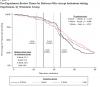
At $450 per review, I confess that I would probably rescind my longstanding personal policy of not doing peer reviews and maybe start doing them.To be clear: I’ve done lots of project and funding reviews as part of my day job; it comes with the salary and I don’t mind doing it (I actually learn a lot). But academic journals aren’t my employer, and they’re not paying my employer. They expect people to work for them for free. That doesn’t interest me. But if they were paying? Yeah, especially during my upcoming retirement as I look for new forms of part-time income to supplement my public service pension (which is not, as the media claims, gold-plated), doing a few reviews a week would work really well for me. But of course, large and wealthy publishing corporations didn’t get that way by actually paying their academic employees. See also: An Experiment with Referees at the Journal of Public Economics. Via Andrew J. Steinmetz.
Web: [Direct Link] [This Post]
Recent Stories
Autonomous cars, drones cheerfully obey prompt injection by road sign
: AI vision systems can be very literal readers
Jan 31, 2026NVIDIA is still planning to make a ‘huge’ investment in OpenAI, CEO says
Bloomberg reports that CEO Jensen Huang said NVIDIA's investment in OpenAI could be the largest the company has ever made.
Jan 31, 2026AI Agent Engineer at CollectWise
About Us CollectWise is a fast growing and well funded Y Combinator-backed startup. We’re using generative AI to automate debt collection, a $35B market in the US alone. Our AI agents are already outperforming human collectors by 2X, and we’re doing so at a fraction of the cost. With a team of three, we scaled to a $1 million annualized run rate in just a few months, and we are now hiring an AI Agent Engineer to help us reach $10 million within the next year. Role We are hiring an AI Agent Engineer to design, optimize, and productionize the...